
When couples contact us about getting married in Crete, they usually have the same months in mind: May to October. Occasionally April or November. But December, January or February? Almost never.
And I understand why. Greece is associated with sunshine, turquoise water, long summer evenings and dinners under the stars. Winter doesn't quite fit the picture. But after living on Crete and organising weddings here since 2010, I sometimes wonder whether we're overlooking a rather interesting possibility.
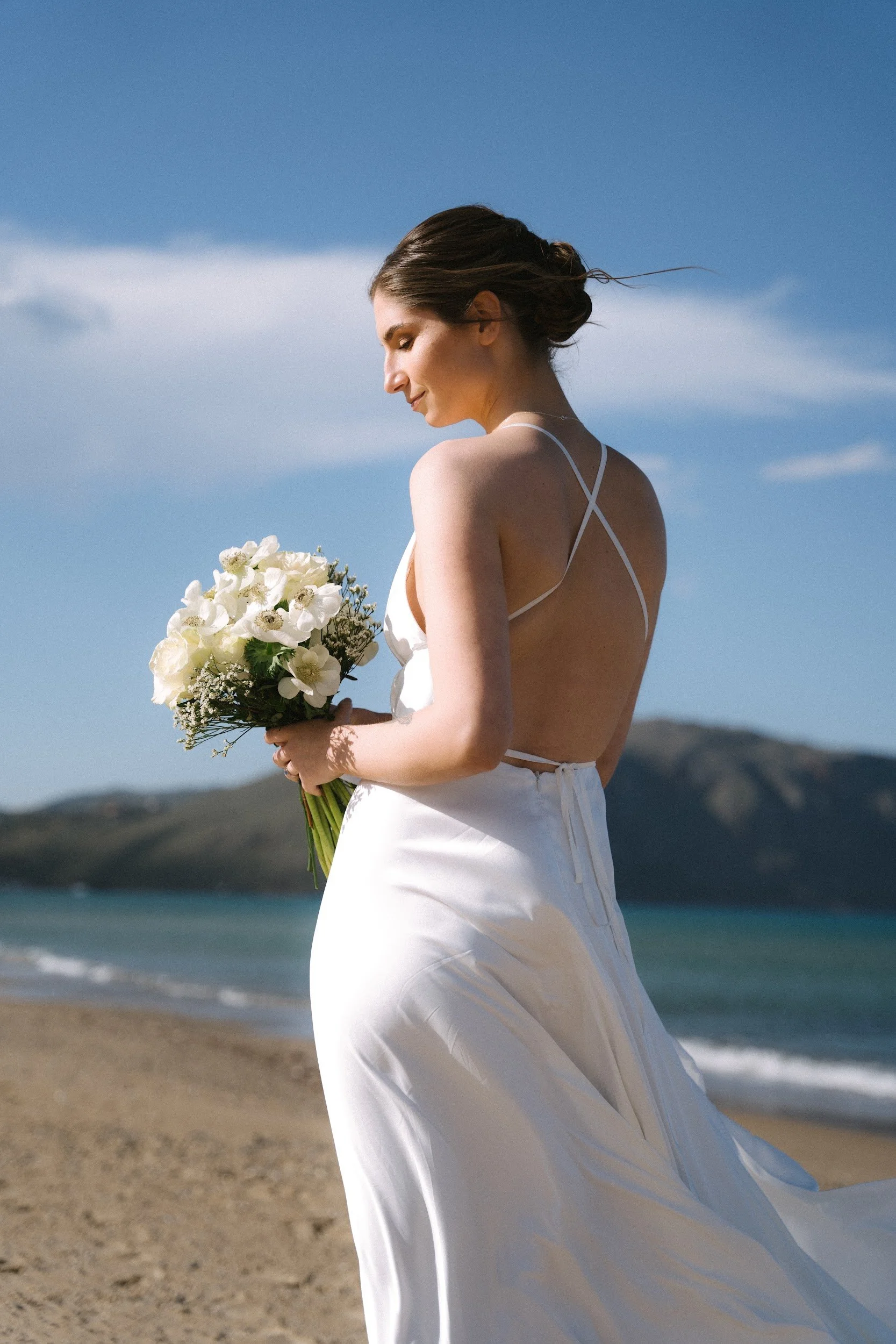
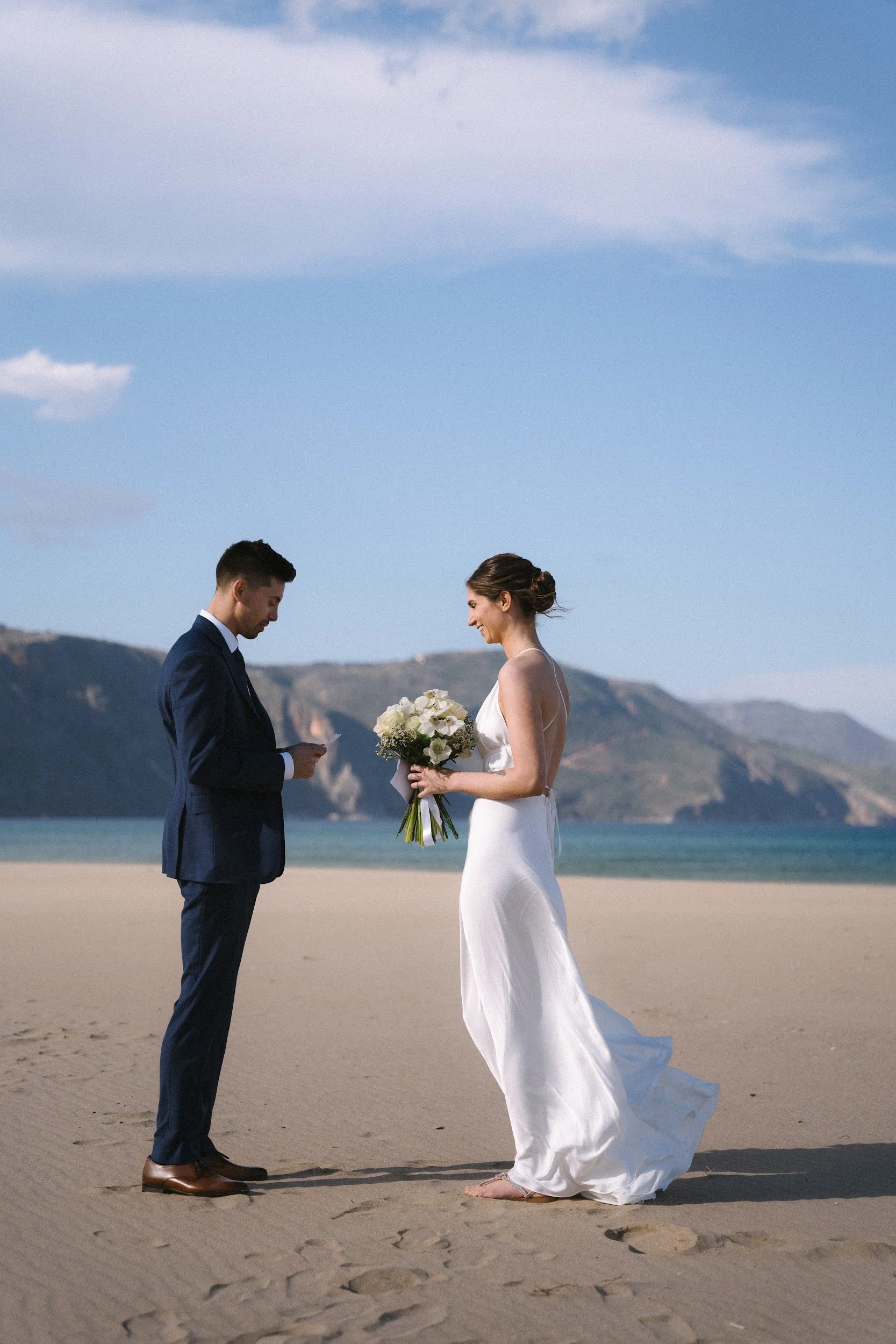
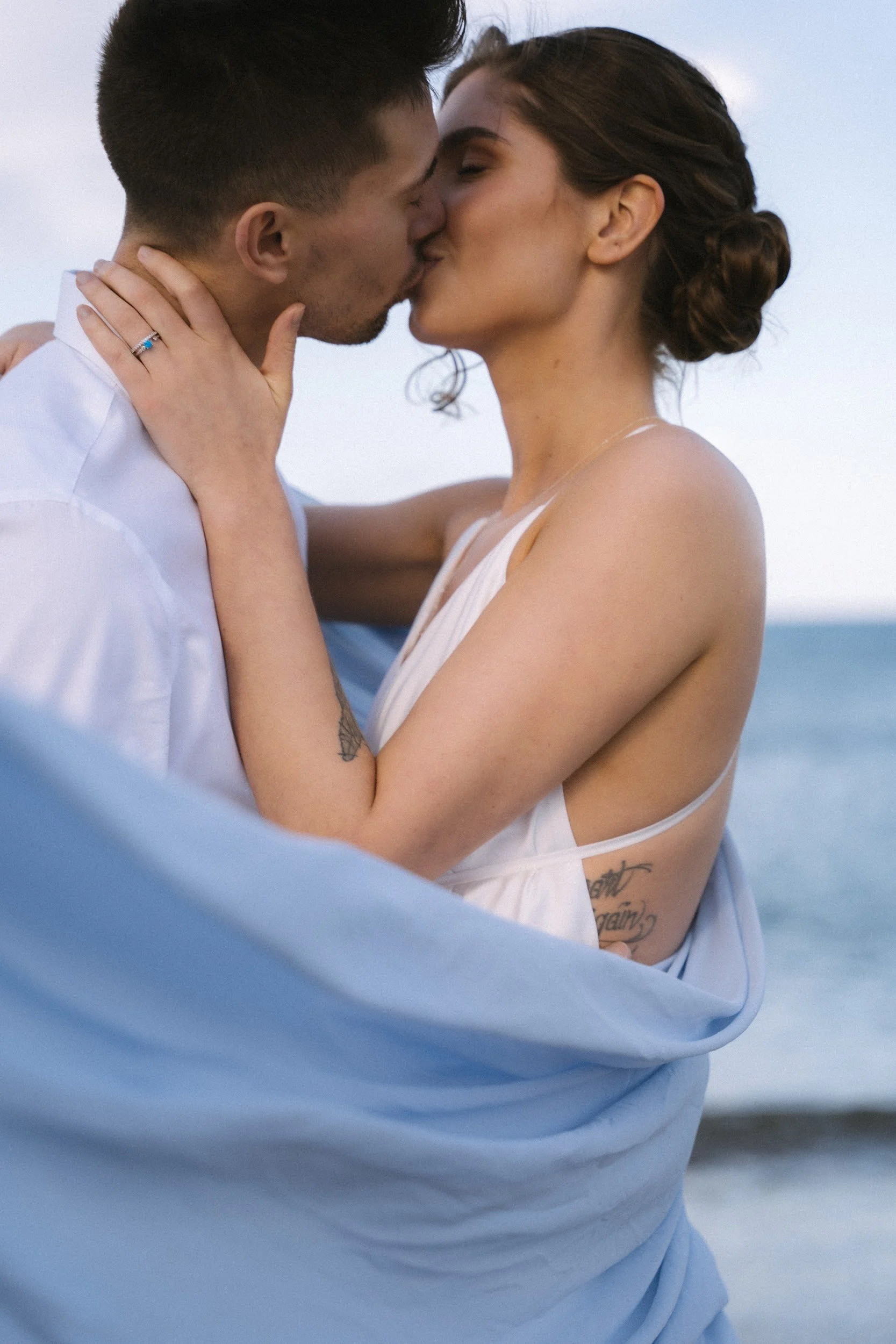
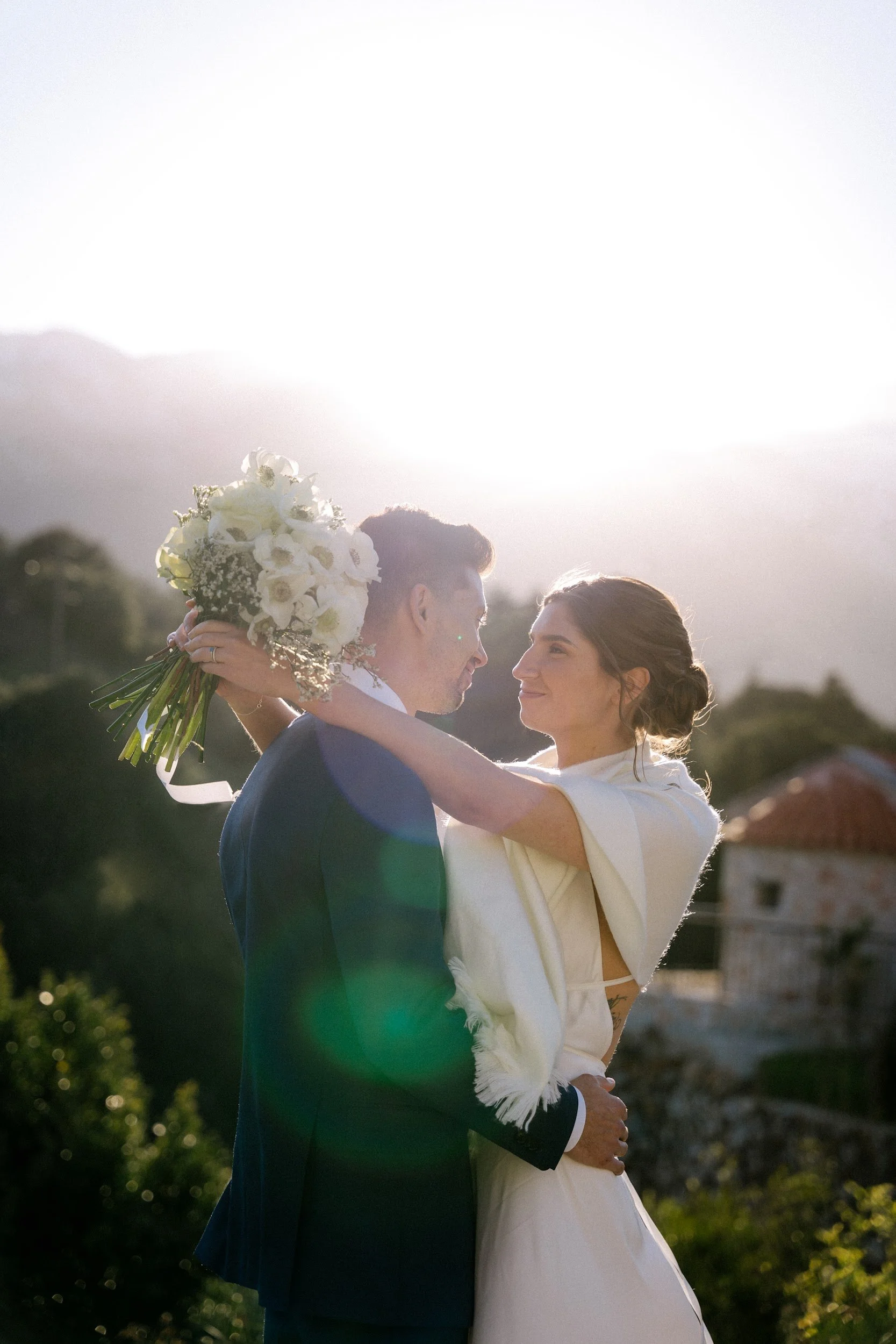
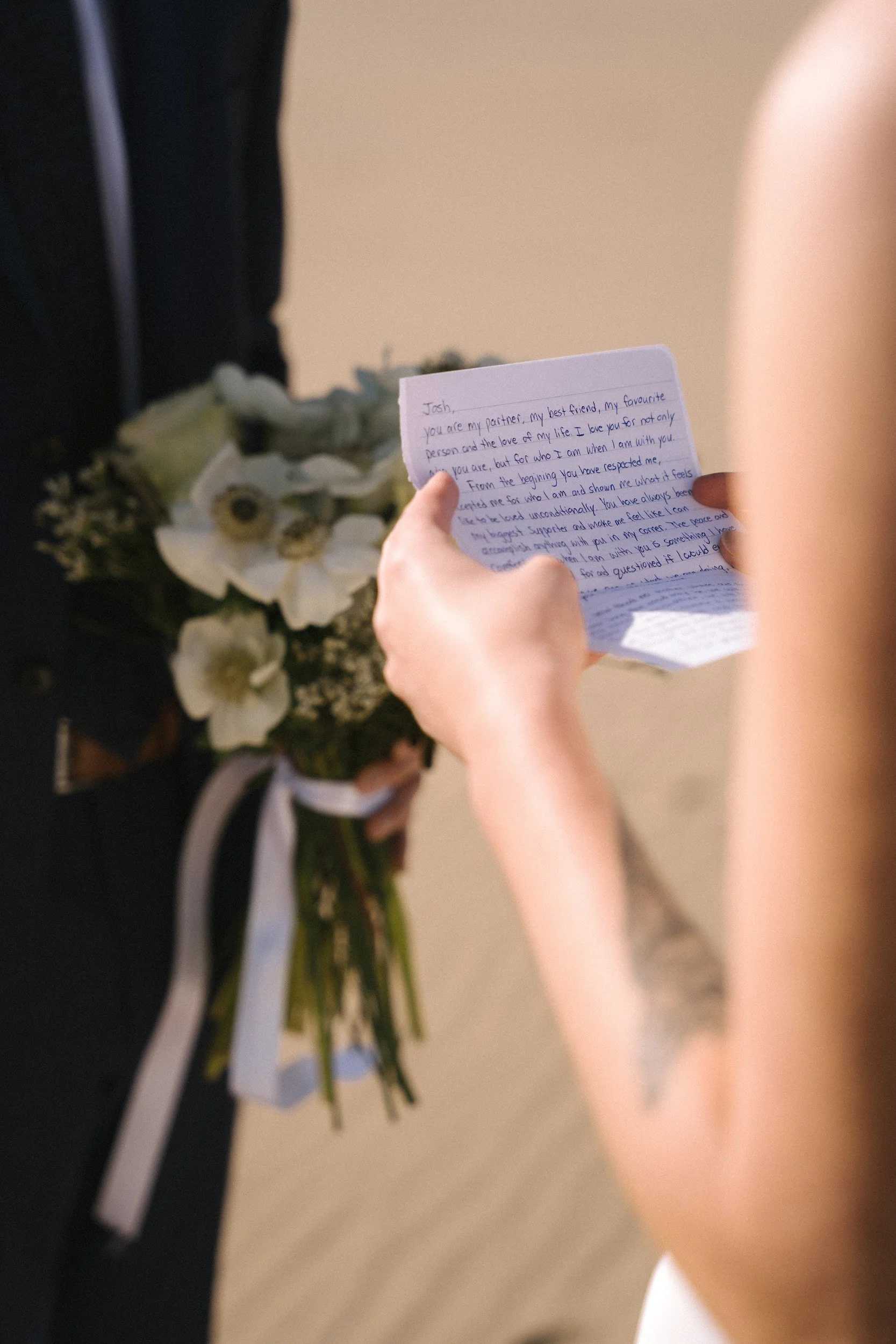
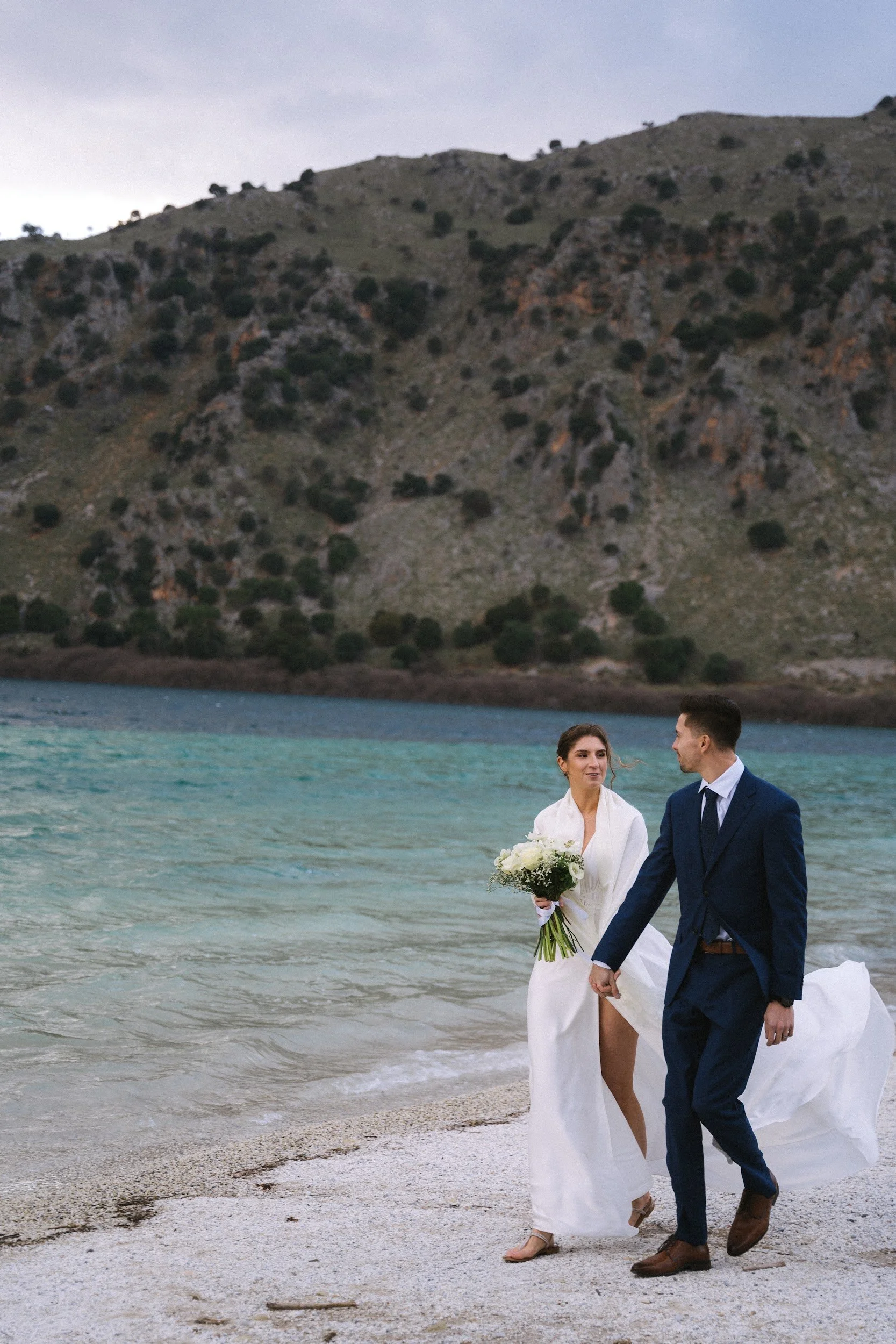
On February 2024, Amelia and Josh travelled all the way from Canada to exchange their wedding vows on a beach near Chania. Just the two of them, with the sea, mountains and an enormous stretch of empty sand. Looking at their photographs, you might find it difficult to believe they were taken in February. They were. And they show a side of Crete that most summer visitors never get to experience.
Crete Is a Different Island in Winter
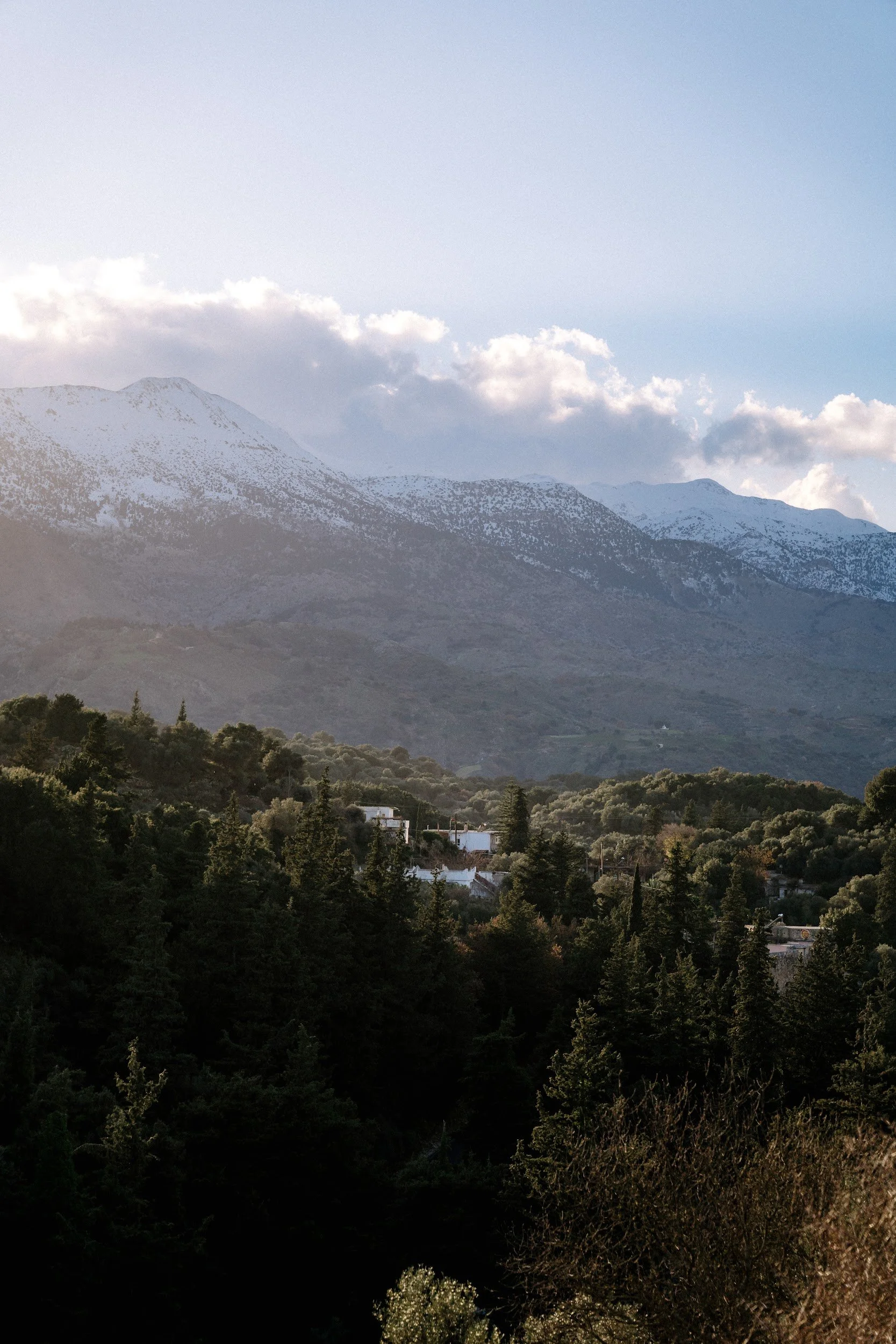
The first thing you notice is the colour. After the autumn rains, the hills turn green. The mountains look dramatic, sometimes with snow on their peaks, while the beaches are almost entirely deserted. Places that are crowded with sunbeds, umbrellas and tourists in August become quiet again.
I particularly enjoy this time of year because Crete returns to its everyday rhythm. The island is no longer organised primarily around visitors. People go about their lives, villages become quieter, and you can spend an afternoon in a traditional taverna without feeling that you're part of a tourist programme.
Of course, many seasonal hotels, beach restaurants and tourist businesses close for winter. But Crete is a large island with a substantial year-round population. Chania, Rethymno and Heraklion remain lively, with restaurants, cafés, shops and accommodation operating throughout the year.
For couples who enjoy travelling independently and discovering places beyond the usual tourist routes, winter can be a particularly rewarding time to visit. And for a small wedding or elopement, the absence of crowds opens up interesting possibilities.


December, January or February?
Not all winter months feel exactly the same. December can be a lovely time to visit Crete, especially around Christmas and New Year. The towns are decorated, restaurants are busy with local celebrations, and the island has a festive atmosphere that is quite different from the summer season.
January is generally quieter. The countryside is green, wildflowers can start appearing, and on a sunny day the coast can feel surprisingly mild. Usually the Indian summer starts after January 7.
By February, It's one of the wettest and coldest periods of the year, although sunny days are certainly possible. Snow in the mountains can make the landscape particularly beautiful. The countryside is green, wildflowers can start appearing, and on a sunny day the coast can feel surprisingly mild.
But I wouldn't promise good weather in any of these months. Winter in Crete is still winter. Rain, strong winds and sudden changes in temperature are all part of the picture. The weather can change quickly, and conditions on the coast may be very different from those in the mountains.
This is why I would never recommend a winter wedding to a couple who expects the same experience as a summer celebration, only with fewer tourists. It's a different kind of experience altogether.
What You Should Know Before Planning a Winter Wedding
For an elopement, however, we have an advantage: flexibility. With just two people, it's much easier to adjust the ceremony time or choose an alternative location if the forecast changes. I would recommend spending several days on the island rather than arriving the evening before the ceremony. This gives us some room to work around the weather.
A few other things are worth considering.
Winter days are shorter, so photography and ceremony times need careful planning. Many seasonal wedding venues are closed, although for a small elopement we don't necessarily need a conventional venue at all.
A beach, an olive grove or a mountain landscape might be a wonderful setting, provided we consider access, local restrictions and weather conditions. And if you're planning an official civil marriage rather than a symbolic ceremony, the legal requirements and approved ceremony arrangements must be checked separately. Not every beautiful outdoor location can be used for a legally recognised wedding.
Finally, bring something warm. A wedding dress and a February sea breeze aren't always the most comfortable combination.
So, Would I Recommend It?
For a large destination wedding with guests travelling from different countries, winter brings considerable challenges. Weather uncertainty, limited indoor space venue availability and shorter days make planning more complicated.
But for an elopement or a very small celebration, I think it's an option worth exploring. Especially if you enjoy nature, travelling outside the tourist season and discovering places at their quietest.
Amelia and Josh didn't need an elaborate setting or a complicated programme. They came to Crete in the middle of winter, traveled around the island, stayed at the seaside hotel in Chania, enjoyed their day at the beach and exchanged their vows by the sea, with a dinner at one of the best restaurant of the town with a fantastic view.
And perhaps that's the beauty of an elopement: you don't have to follow the traditional wedding calendar. Crete doesn't stop being beautiful when summer ends. It simply becomes a different island.
Considering a winter wedding in Crete?
Whether you're planning an intimate elopement or a small celebration, we'd be happy to help you explore what's possible during the quieter months. We live here year-round, know the island beyond its summer season, and can help you find a location that suits both your plans and the time of year.