
Two Wedding Markets in Greece: Local and Destination Explained
Couples planning a destination wedding in Crete often come across a confusing contradiction. On one hand, Greece is presented as a premium destination. On the other, they hear numbers that sound almost unreal: 20–30 euros per person, very low food costs, big weddings on small budgets.
Living and working in Crete as a wedding planner means constantly moving between two parallel realities. They share the same island, the same suppliers, sometimes even the same venues, yet they operate according to very different internal logics.
These are the local Cretan wedding market and the destination wedding market. They are often discussed as if they were variations of the same thing. In practice, they are not.
Weddings as Social Structure
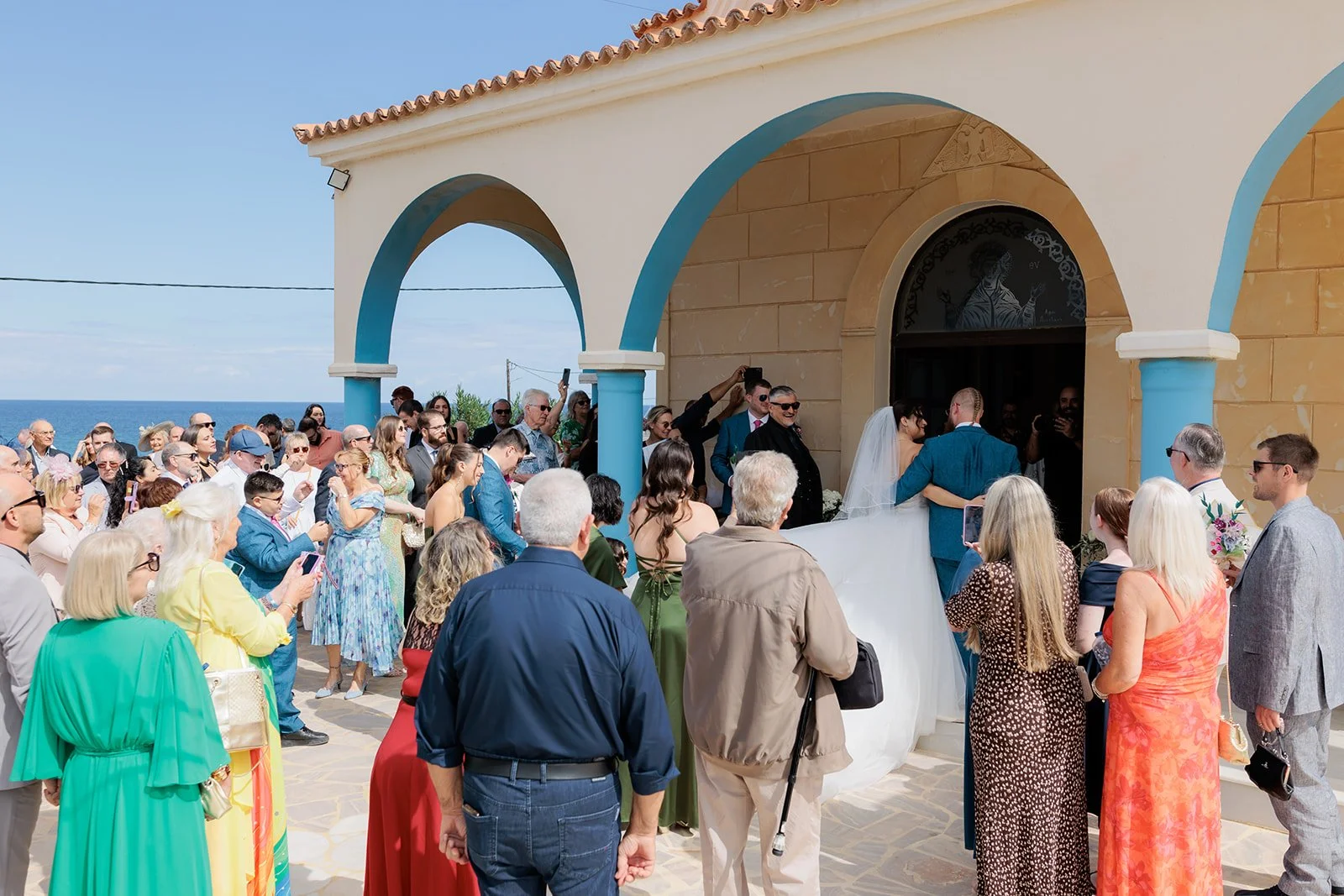
A traditional Cretan wedding is not primarily an event. It is a social mechanism. The size of the guest list is often 500 +, sometimes 1500 people, and it is not an exaggeration or a lack of planning. It is the point. Attendance reflects family history, alliances, respect, and social continuity.
In this context, the wedding functions as a collective gathering rather than a curated experience. Time is fluid. Structure is secondary. What matters is presence. Food will be plentiful. It may not arrive at the same moment for everyone, and it does not need to. Decoration is symbolic at most. No one is evaluating details, because detail is not the currency here.
This is not a question of taste or modernity. It is a question of meaning.
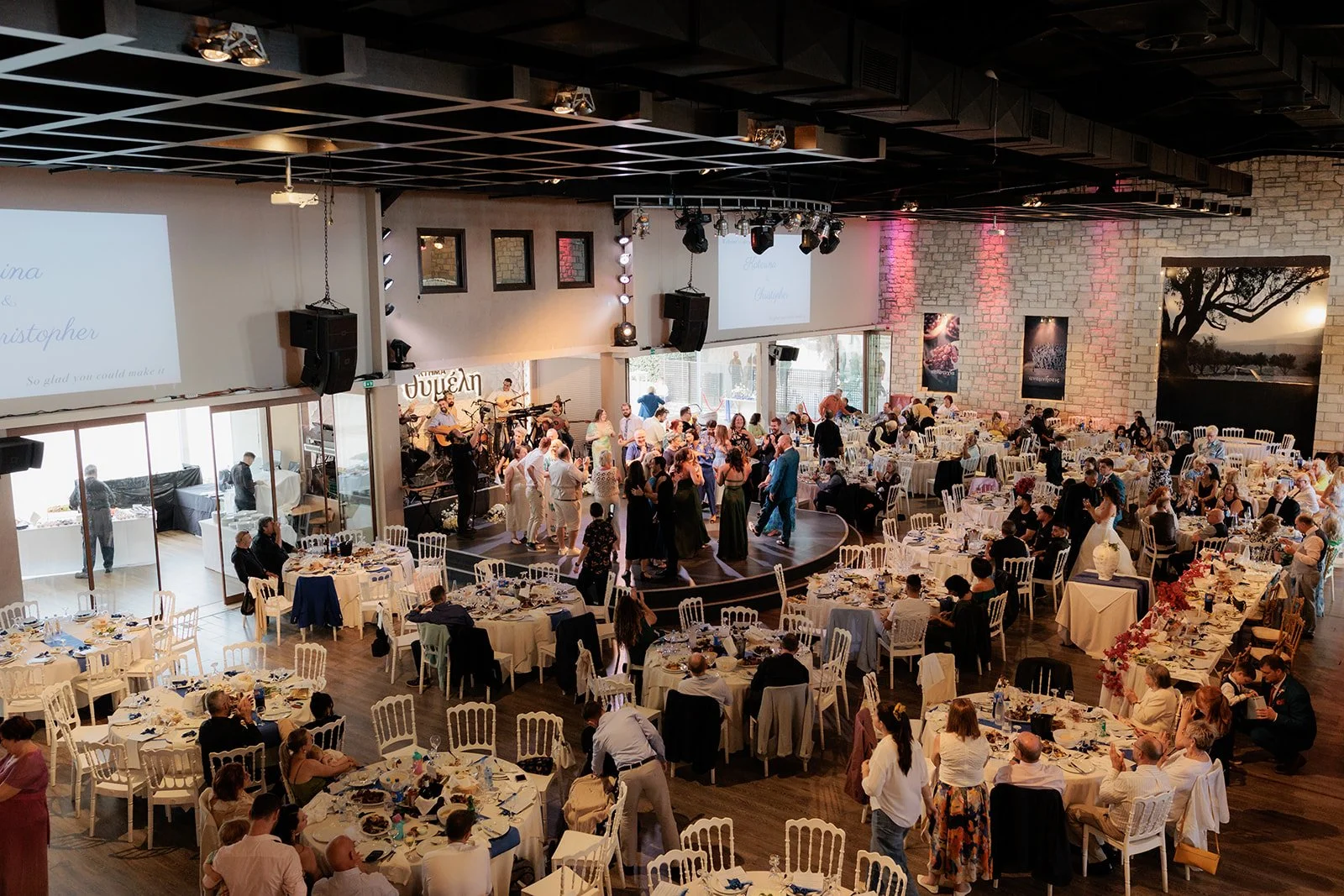
Photo by Antonis Kelaidis
The Invisible Economy Behind Local Weddings
Pricing in local weddings follows rules that are rarely visible from the outside. In Crete, professional roles overlap with personal relationships. If you are a caterer, a musician, a florist, a videographer — you are not only a vendor. You are part of a living social fabric. And you know what? Local couples simply don’t need a wedding planner, because families (especially parents) are willing to organize everything themselves.
Some weddings cannot be declined. Some services are offered at minimal cost, or almost as a contribution.
Refusing participation may have consequences that extend far beyond one event.
Prices are lower not because the work has no value, but because expectations are different and responsibility is shared and relationships matter more than contracts. This creates a pricing logic that cannot be exported.
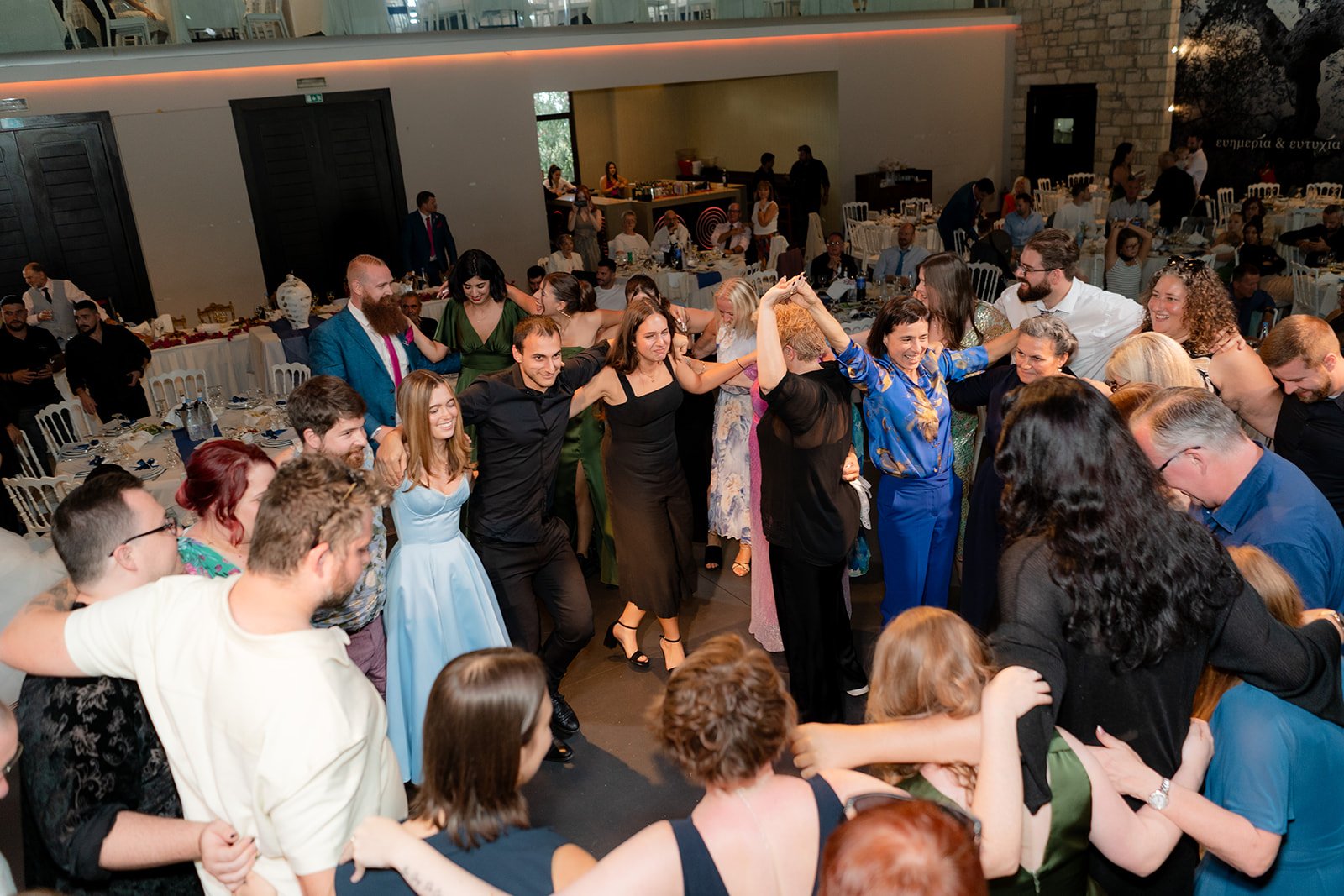
Photo by Antonis Kelaidis
Destination Weddings as Designed Experiences
Destination weddings in Crete belong to a different conceptual space.
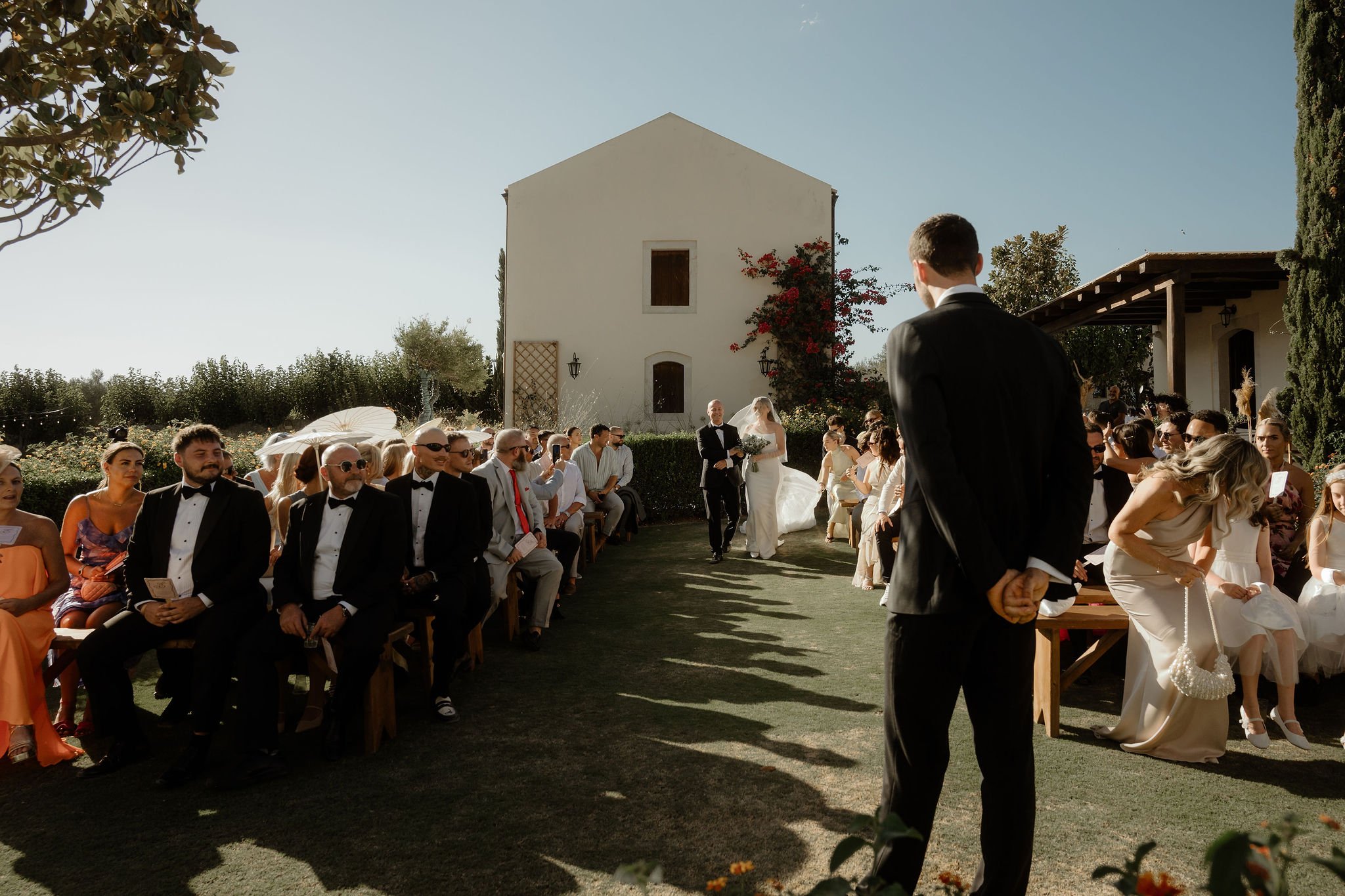
They are built on intention rather than obligation. They prioritize time structure, personal experience, individual comfort and aesthetic coherence. These weddings are not collective rituals. They are designed moments.
Such things as punctuality, coordination, hot, well-presented food and detailed planning - everything that is optional in a local wedding becomes essential here. This shifts the entire production model, because the control has a cost. Hot food served on time requires staff. Flow requires coordination. Design requires rentals, transport, setup, dismantling. Responsibility requires contracts, communication, contingency plans.
The price of a destination wedding reflects the effort required to make a temporary structure function smoothly in a place where no one shares the same assumption. Destination weddings require precision because there is no shared cultural safety net. Everything must be articulated, agreed upon and delivered. It is exposure. The price reflects not luxury, but vulnerability, i.e. the need for things to work.
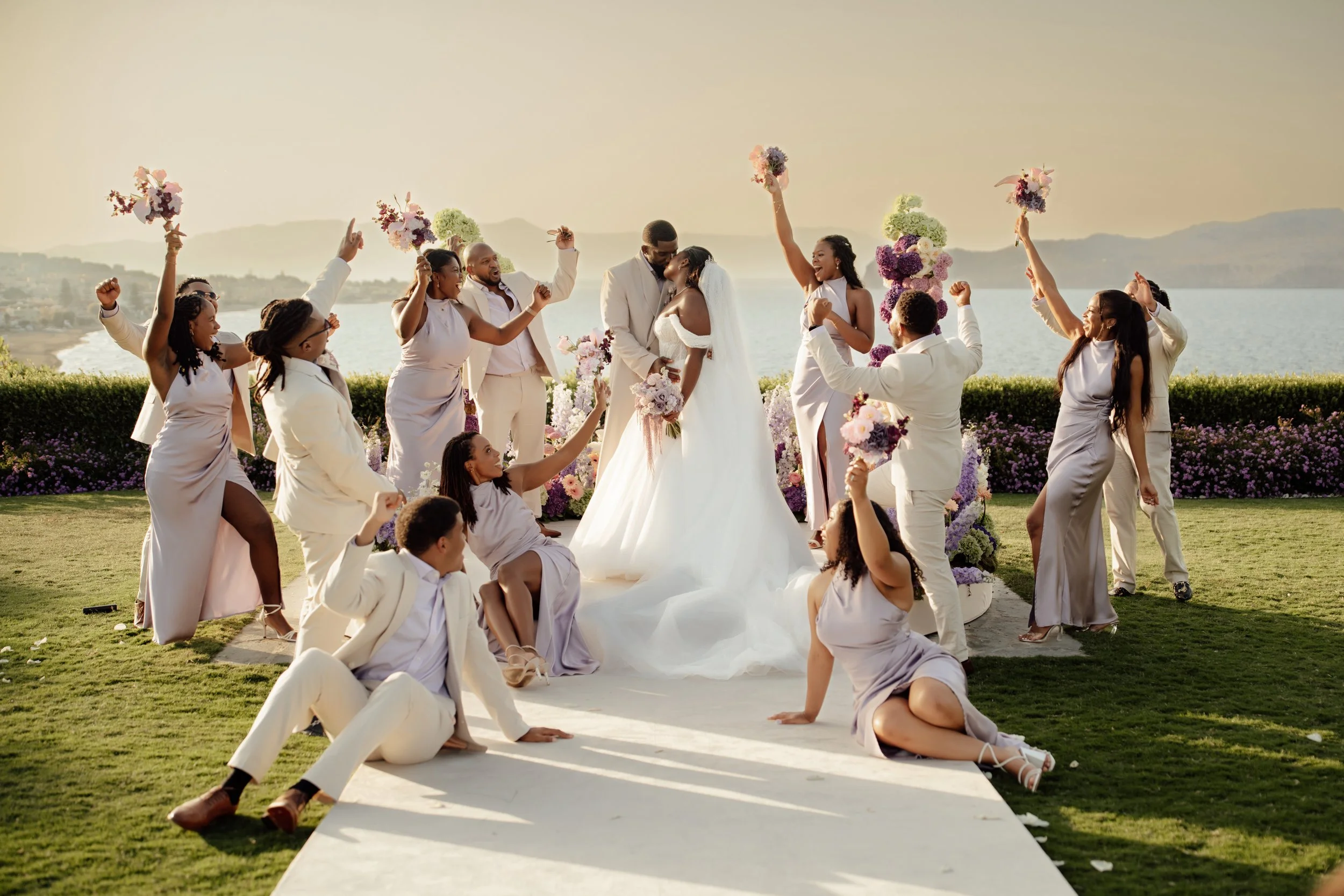
Photo by Yakili di Roma
Where Confusion Begins
The confusion arises when these two systems are compared using the same metrics, especially cost. A destination couple hears: “Locals do it for much less.” And start wondering: Are we overpaying? Are vendors exaggerating because we are foreigners? Are planners inflating costs? The answer is usually no. This information is technically true and practically irrelevant, but it simply belongs to another system, with other priorities and another definition of success.
It also happens that a local couple sees many images of destination weddings on Instagram and contacts a planner to organize their own wedding in Crete, but is shocked when they discover the actual cost of professional wedding planning and a decor.
All of this made me think it’s time to clarify the existence of 2 different markets in one space. Applying local pricing logic to a destination wedding does not reduce costs, it destabilizes expectations and vice-versa.
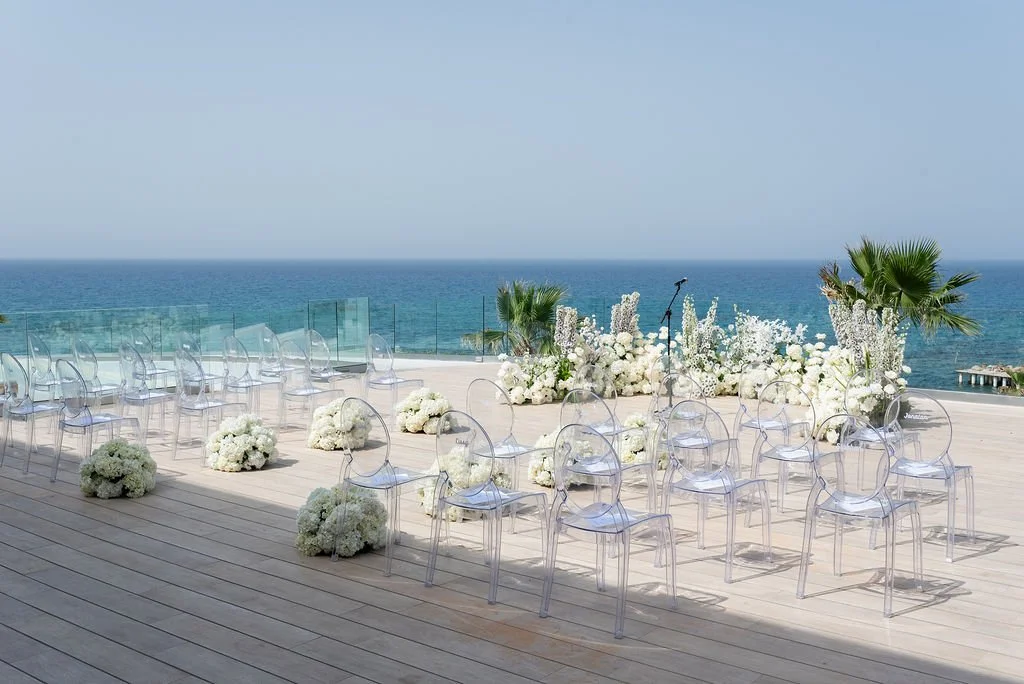
Photo by Effie Georgoulaki
One Island, Two Logics
What makes Crete complex is not the existence of two wedding markets, but their proximity. The same caterer may cook for a local wedding as part of a lifelong relationship and serve a destination wedding as a fully accountable professional. I wouldn’t call it a contradiction, it is contextual intelligence.
So here is my advice to a destination couples in Crete: when planning a destination wedding in Crete, compare only with other destination weddings. Ask vendors about service scope, not just price and work with professionals experienced in international events. Context matters more than numbers.
My advice to local couples who truly want a destination-style wedding is simple: leave Crete and do a real destination wedding - whether that’s an elopement or an intimate celebration abroad. If you feel that a traditional wedding is not what you want, sometimes the best choice is to step away and celebrate somewhere far from home. In many ways, this is exactly why destination weddings came into existence in the first place.
Planner’s task
A planner’s responsibility is not to promise simplicity, but to clarify complexity. Our taks is to help couples understand what kind of meaning they are actually seeking. Not every wedding needs to be local. Not every wedding should be destination. What matters is coherence, and some couples seek rootedness, and others seek authorship.
Knowing which question you are answering - Where do I belong? or What do I want to create? - determines everything that follows. Including the cost.
Image by Effie Georgoulaki